Move-in Special
Get $1,500 off on select floor plans and up to 2 months free base rent!!!
Contact our leasing office today for details and availability!*
Minimum lease terms apply. Other costs and fees excluded.
Southwest DC sits beside one of the most museum-rich corridors in the world, defined by Smithsonian institutions, federal landmarks, and cultural centers that are open year-round and anchor Washington’s arts and history landscape. Here are some of the most noteworthy museums in Southwest DC and along the National Mall.
The National Museum of African American History and Culture is one of the most powerful and comprehensive museums in the Smithsonian system. Its galleries move chronologically from the early Atlantic world through the civil rights movement and into contemporary culture.
Key Galleries and Experiences:
Timed-entry passes are usually required due to demand.
The National Museum of the American Indian focuses on the histories and present-day identities of Native nations across the Americas. The curved, stone exterior and surrounding landscape echo the natural forms of the Potomac River Valley.
Exhibits combine historical narratives, contemporary art, and community-led perspectives, making it one of the more distinct architectural and cultural destinations on the Mall.
The Hirshhorn Museum and Sculpture Garden is the Smithsonian’s home for contemporary and modern art. The museum’s circular form, sunken sculpture garden, and bold programming make it a standout.
Notable Experiences:
It’s one of the most visually striking, photo-friendly museums in DC.
The National Air and Space Museum reopened after a major renovation with redesigned galleries and interactive experiences that make aviation and space history feel immediate and tactile.
Highlights and Must-Sees:
It remains one of the most engaging museums for hands-on experiences.
The National Museum of American History examines the nation’s cultural and political evolution through artifacts, personal stories, and rotating exhibitions.
Highlights:
It’s the easiest museum to revisit repeatedly, since exhibits rotate often.
The Museum of the Bible blends historical manuscripts, archaeological artifacts, and large-scale digital installations. Its architecture and interactive displays make it distinct from the Smithsonian institutions nearby.
The United States Holocaust Memorial Museum presents one of the most comprehensive and emotionally powerful examinations of the Holocaust. Galleries feature historical documentation, survivor testimony, and research-driven exhibitions. The architectural design reinforces the intensity and gravity of the subject matter.
The National Museum of Natural History houses more than 145 million specimens, making it one of the world’s leading natural science institutions.
Key Exhibits:
This is the Smithsonian’s most family-friendly museum and an easy one to explore in shorter segments.
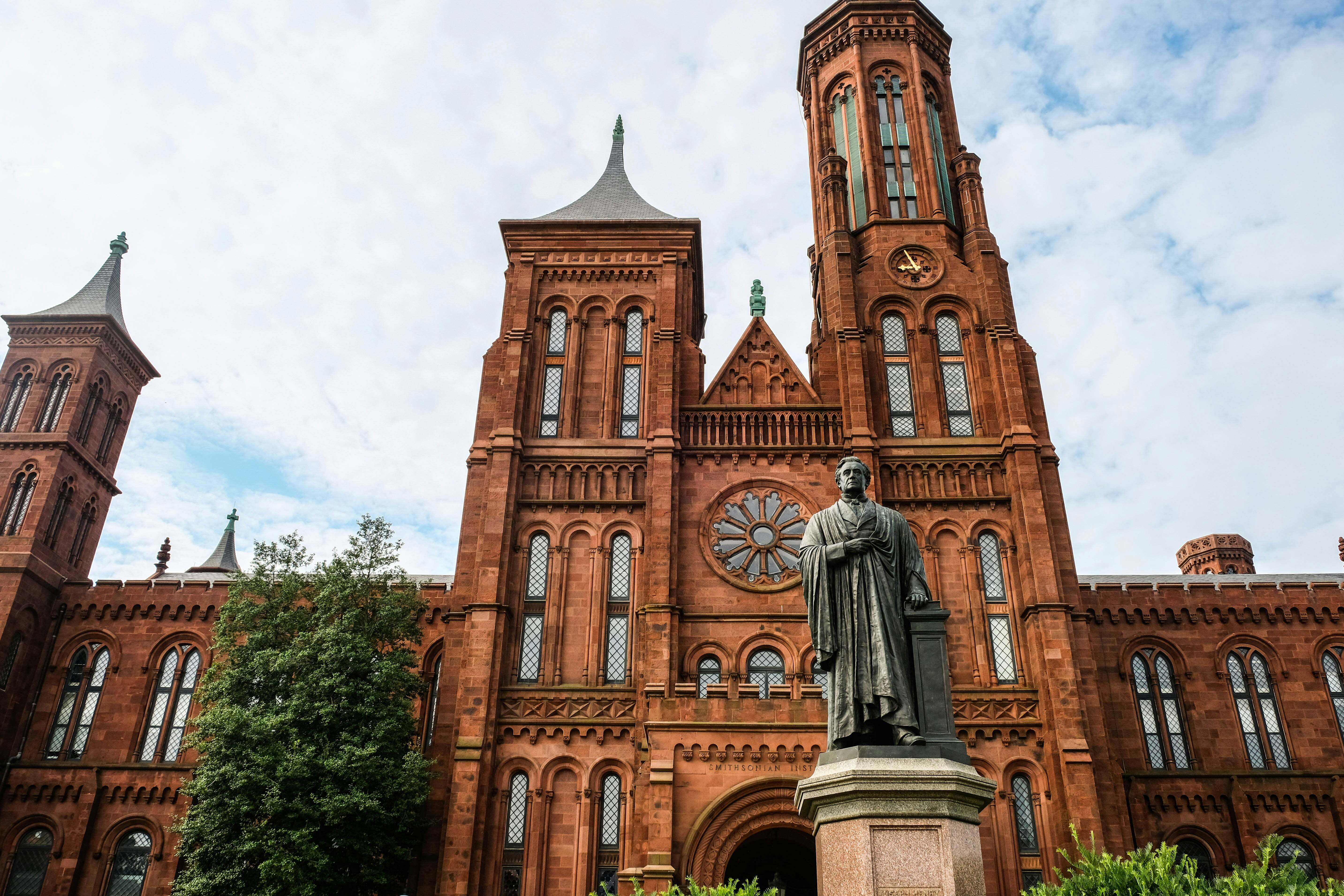
The Smithsonian Institution Building, known as the Castle, serves as the visitor center for all Smithsonian museums.
Notable Features:
It’s a smart first stop if you intend to visit several museums in one outing.
If you’re interested in exploring beyond the Mall:
These offer quieter alternatives when Mall museums are crowded.