Move-in Special
Get $1,500 off on select floor plans and up to 2 months free base rent!!!
Contact our leasing office today for details and availability!*
Minimum lease terms apply. Other costs and fees excluded.
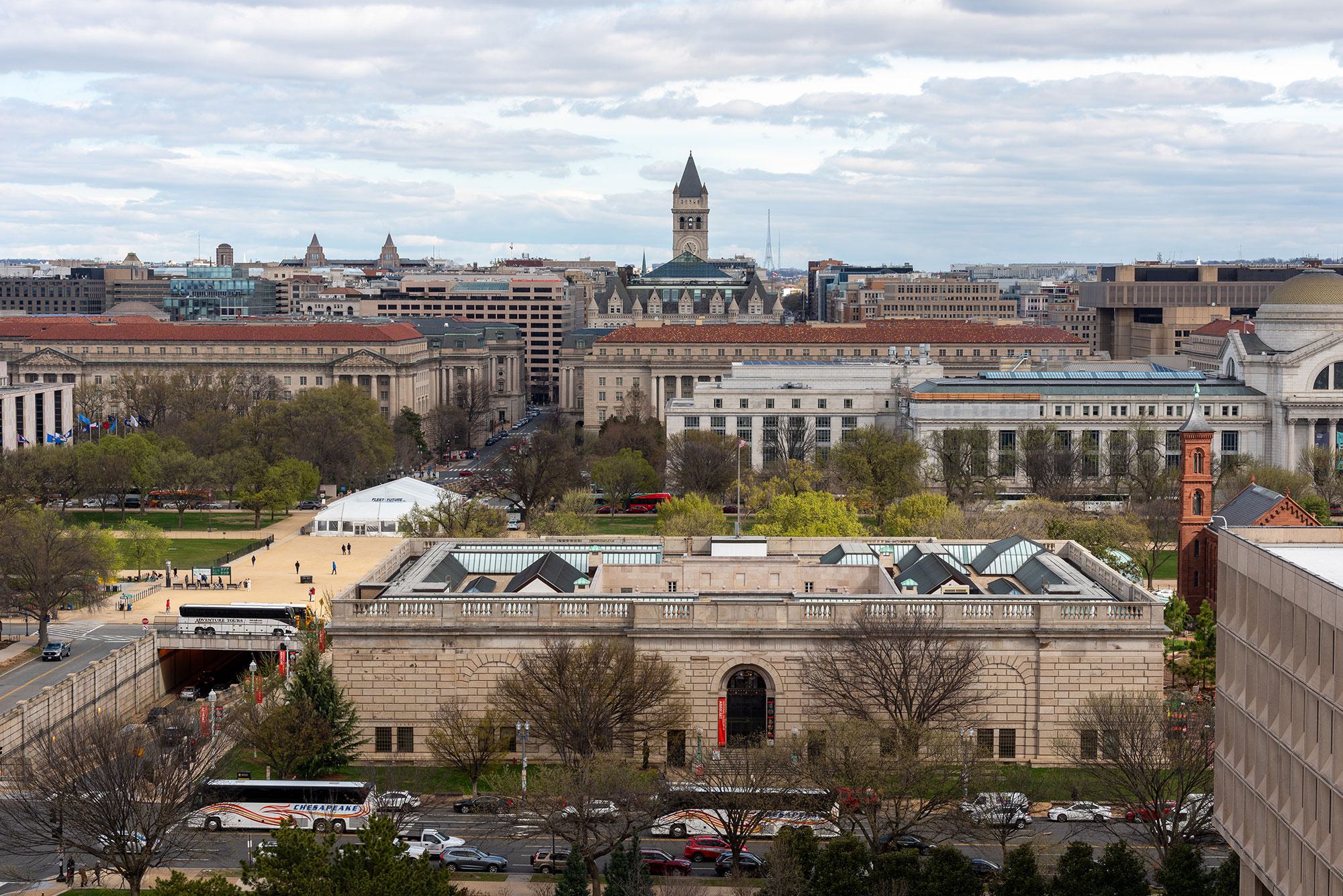
Southwest DC is one of Washington’s most distinct quadrants — shaped by mid-century urban planning, expansive residential cooperatives, and a growing waterfront district along the Washington Channel. It stretches from the National Mall south to the river, blending civic institutions, federal offices, residential communities, and entertainment venues within a compact footprint.
This isn’t Georgetown’s rowhouse texture or Capitol Hill’s brick grid. Southwest feels broader and more modernist; superblocks, long sightlines, and a mix of co-ops, high-rises, and newer luxury apartment buildings.
Southwest sits directly south of the National Mall and west of Capitol Hill. Its general boundaries are:
Within Southwest, distinct sub-areas include:
Southwest DC is defined by proximity. From the federal core near 12th Street SW, you can also walk to the waterfront in about 15–20 minutes. People who live here enjoy a rare overlap of civic landmarks, riverfront paths, stadiums, and residential life, all within one neighborhood.
The Mall and Smithsonian access is essentially immediate from Southwest Federal Center, making these one of the neighborhood’s strongest positioning points. DCA is typically under 5 miles via 395, which makes it one of the fastest airport trips in DC.
Southwest DC feels structured, open, and layered. It’s one of the city’s most intentionally planned quadrants — shaped by mid-century redevelopment, broad avenues, residential cooperatives, federal institutions, and a growing waterfront district. The scale is different from Capitol Hill or Shaw. Blocks are wider. Sightlines are longer. The skyline stays low. The character changes depending on where you are:
Southwest Federal Center
Civic and residential. Daytime energy comes from federal offices and Smithsonian visitors, while evenings feel calm and local. Proximity to the Mall gives it a uniquely DC backdrop — joggers, museumgoers, and Capitol views.
L’Enfant Plaza
More urban and transit-oriented. Office towers, a major Metro hub, and structured public spaces define this pocket. It’s busiest during the workday and quieter after hours, though residential buildings are increasing.
The Wharf / Southwest Waterfront
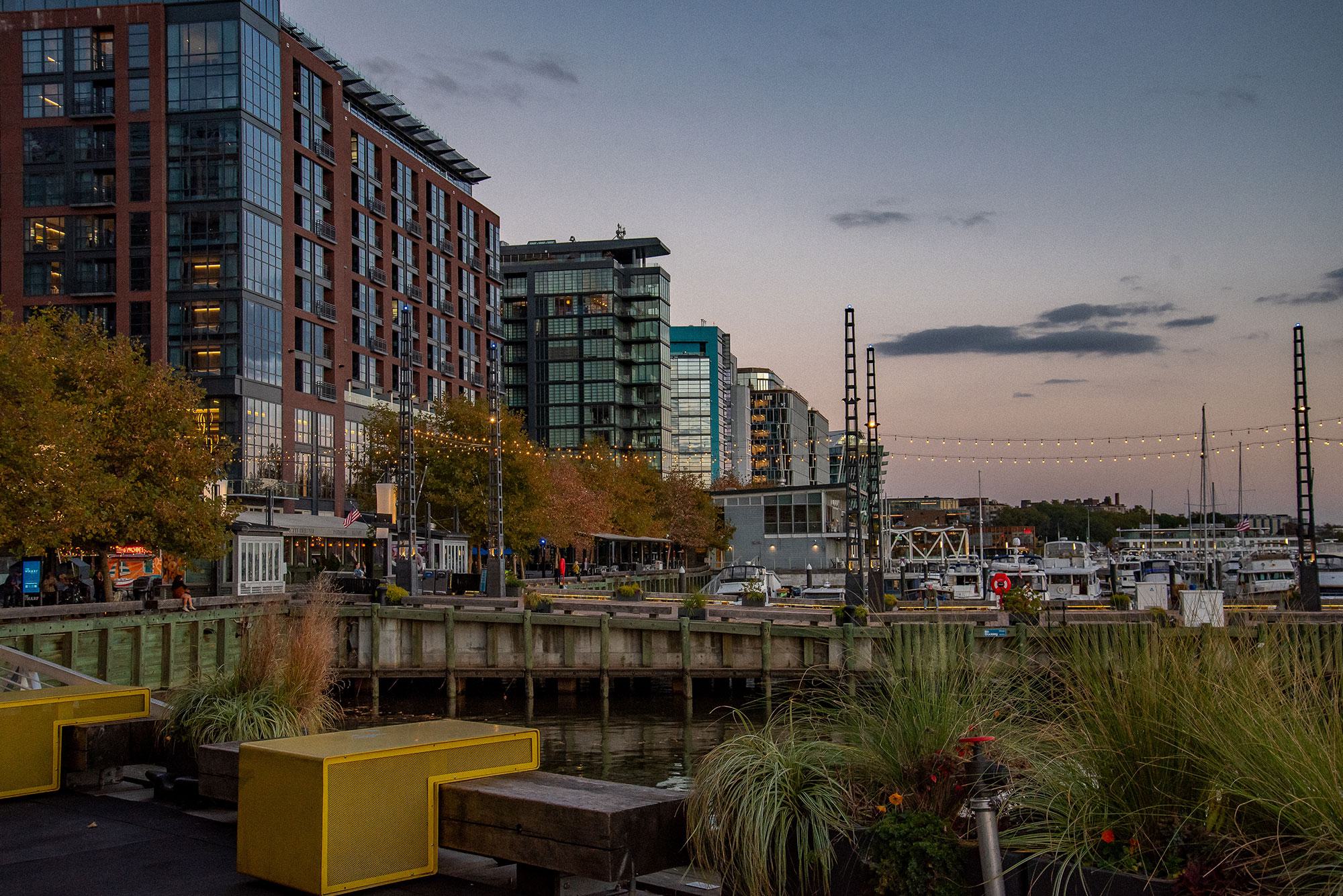
Social and entertainment-driven. Restaurants, piers, live music venues, and riverfront paths create activity, especially on weekends and event nights. It’s the most outward-facing and visitor-heavy part of Southwest.
Buzzard Point
Emerging and residential-forward. New apartment buildings near Audi Field, river access, and quieter streets give this area a more developing, modern feel compared to the historic cooperative core.
As one of DC’s Mall-adjacent neighborhoods, Southwest commands pricing that reflects its location — steps from federal offices, Smithsonian museums, Metro hubs, and the waterfront. But unlike many Northwest DC neighborhoods, Southwest’s housing mix creates a wider pricing spectrum.
Housing
Southwest is defined by its mid-century redevelopment, and that still shapes the market today:
Rather than rowhouse living, this area is defined by larger-scale structures repurposed for residential use. Annex on 12th stands out as a conversion of a former federal office building into modern apartments — a typology that feels distinctly Southwest. Adaptive reuse here often means higher ceilings, expansive window lines, and layouts shaped by the building’s original institutional footprint.
Older co-ops in Southwest can offer more square footage at lower per-square-foot pricing than many Northwest rowhouse neighborhoods, though monthly co-op fees are typically significant. ewer waterfront construction commands premium rents comparable to Navy Yard or Downtown DC.
Because Southwest was largely rebuilt in the mid-20th century, structured garage parking is more common here than in Capitol Hill — though in newer buildings it generally carries a monthly fee. Luxury apartments at Annex on 12th do offer parking (contact our leasing office for details).
Everyday Expenses
Daily costs vary depending on which pocket of Southwest you’re in.
Transportation Costs
This is where Southwest stands out. With access to three Metro stations, many residents choose to live car-light or car-free.
Immediate access to I-395 also makes Reagan National Airport and Northern Virginia easily reachable.
Daily life here isn’t anchored by a single shopping corridor. Instead, Southwest DC is shaped by proximity: the National Mall, Metro stations, federal offices, and the waterfront. Everyday attractions and conveniences include:
Mornings often mean commuters heading to Metro or walking toward federal offices. Midday brings museum visitors and joggers looping past the Mall. Evenings are quieter in the residential core, with more activity concentrated near the waterfront and event venues.
Unlike Dupont or Logan Circle, Southwest isn’t boutique-dense or café-saturated. Instead, daily convenience comes from connectivity — you can walk to work, the Mall, the river, or a Metro hub within minutes.
Safety in Southwest varies by pocket and time of day. Residential areas in Southwest Federal Center and the mid-century co-op communities tend to feel calm, especially in the evenings. Wide streets, controlled-access buildings, and lower bar density contribute to a quieter atmosphere than nightlife-heavy neighborhoods. L’Enfant Plaza is busiest during weekday office hours and becomes quieter after work. The Wharf and Waterfront areas see more activity on weekends and event nights.
Southwest is not known for a major nightlife scene. It functions more as a residential and civic district. As in any urban neighborhood, situational awareness is important.
Southwest works well for:
It may not be ideal for:
Southwest DC offers monument proximity, multi-line Metro access, and structured residential communities within a compact footprint. It's less retail-driven than Northwest neighborhoods, but wonderful for commuting, cultural access, and waterfront proximity.
People love living here because you can walk past the Capitol dome in the morning, catch a Metro with four lines at lunch, and end the day along the river without ever feeling removed from the center of the city. Come join us!